

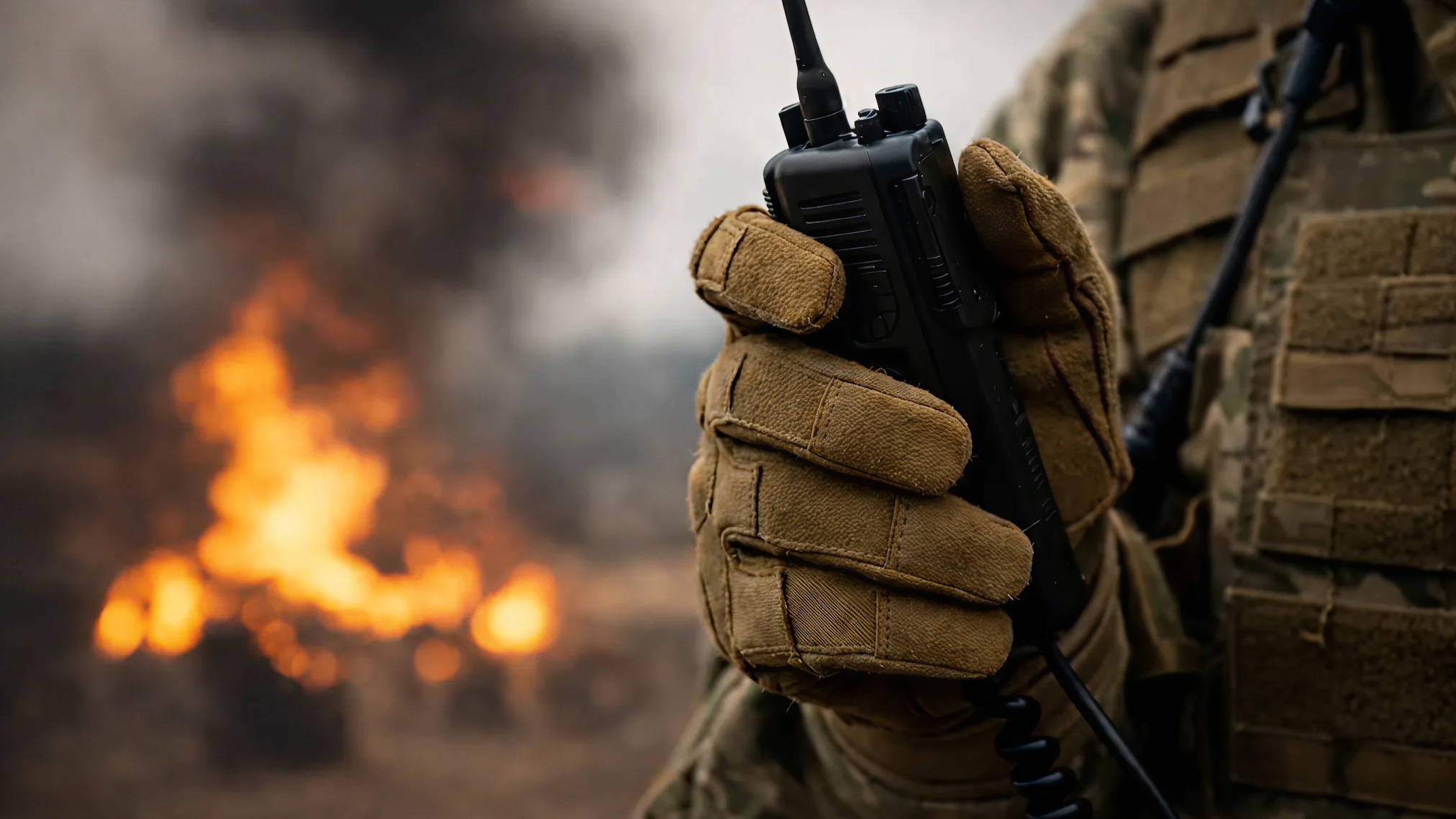
In the chaos of a firefight, infantry units need more than ammunition, ISR, and fire support. They need ultra-robust and resilient networking to comms with allied or Blue force tracking, command and control, and sensor data from squad level up to brigade.
Infantrymen across the unit will carry a range of devices, all linked in the C2 ecosystem. The enemy will do what it can to jam communications nodes. Equipment will be damaged or destroyed, and units move. The warfighter demands networking technology that can easily scale up to link every device on the battlefield, operate on every communications channel, and find the most efficient available path around choke points in the toughest comms environments.
Built for the Fight You Actually Have
ZeroTier’s next-generation connectivity and cybersecurity platform is resilient, secure, and simple, and can handle infantry maneuver in the toughest comms environments without configuring hardware and manually hopping frequencies. It can link any device and every part of the tactical network architecture: tactical radios and smart phones, sensors, hardened computing platforms, vehicle mounted routers and switches, MUOS terminals, UAV relays, and drones for overwatch, and much more. It is the strongest and most economical networking solution for the future of tactical infantry maneuver.
ZeroTier’s lightweight client meets the most stringent SWAP-C requirements and can operate on any device, so users aren’t locked into vendor networking devices. That helps U.S. and allied militaries keep abreast of innovation. And in a conflict with a peer adversary possessing advanced electronic warfare and cyber capabilities, the network linking those devices and systems will need ultra-fast failover to transition among line-of-sight, SATCOM and terrestrial channels.
A ZeroTier software-defined network is built for flexibility and survivability. Using ZeroTier, U.S. and allied infantry units can rapidly stand up a decentralized mesh that links comms equipment and edge devices across the battlespace. With built-in multipathing and multihoming, traffic automatically takes the best available route across any mix of links, eliminating single points of failure. No central appliance is required to broker every connection, so the network grows organically and keeps operating even when individual nodes or paths go down.
ZeroTier assigns each device a stable identity without requiring a static IP address, reducing manual configuration and the overhead of managing address pools. Administrators can authenticate new edge devices and add them to networks without needing to be physically present in the field. Security policies, routing rules and access controls can be applied consistently across thousands of devices and managed from the battalion or brigade level and pushed down automatically.
Traffic among ZeroTier nodes is protected with defense-grade end-to-end encryption. Keys are established directly between peers and stored locally on the device. The system continuously validates identities and cryptographic integrity as connections form and evolve. Meanwhile, ZeroTier’s network policies can quarantine compromised devices or remove them from the mesh network. It connects legacy systems, modern infrastructure and state-of-the-art edge devices under the same policy model, which is a crucial capability for commands that are constantly integrating new technology into older platforms.
ZeroTier’s vendor-agnostic software layer works across legacy and next-generation tactical communications systems, from SATCOM terminals to tactical radio mesh networks to emerging capabilities under the Integrated Tactical Network. It doesn’t require hardware upgrades or locking units into proprietary networking solutions. It enables seamless interoperability with other networked systems across the Joint Force and with coalition partners. It can operate airgapped.
A squad leader’s BFT update might traverse four or five different radio systems — and travel over Bluetooth, cable, VHF/UHF and SATCOM — before reaching the battalion. Each hop introduces delay and potential failure points. But ZeroTier’s adaptive mesh networking automatically finds the most efficient path, reconfiguring the tactical network topology as the situation on the battlefield changes.
ZeroTier creates a software-defined overlay network that bonds together multiple physical transports — SATCOM uplinks, 4G/5G, tactical RF mesh networks, VHF/UHF data links — into a unified virtual network. It intelligently routes each packet across whatever paths are currently available, automatically failing over in milliseconds when links degrade. ZeroTier dynamically adjusts routing, creating alternate paths when primary ones fail, and all without manual intervention by a comms specialist. Administrators, of course, can manage this automation to either use dynamic topologies appropriate to the environment, or something more fixed, if that is their choosing.
ZeroTier’s mesh architecture enables the network to remain functional as long as nodes can reach each other through any available transport, whether via tactical radio links, SATCOM backhaul, or other IP-capable connections. If one platoon’s primary radio link to the company gets jammed, ZeroTier automatically relays it through a second platoon’s network connection, or through an aerial relay. This happens in milliseconds, without human intervention.
When Seconds Decide the Fight
Here’s how it works in a fight: A platoon makes contact with the enemy and attempts to send the enemy’s position back to the company for fire support. But the terrain and adversary EW have knocked out the primary radio link.
Without ZeroTier, the radio operator tries different frequencies manually. By the time he establishes contact, perhaps five minutes later, relaying through another platoon, the enemy has displaced. With ZeroTier, the enemy position report is sent and automatically rerouted through the second platoon’s relay and an aerial node simultaneously. Multiple redundant paths ensure delivery. The message reaches the company fire support officer in seconds, artillery fires while the enemy is still in position, and the emplacement is destroyed.
Want to learn how ZeroTier’s resilient, identity-first networking limits access by design? Request a demo today.
Want a deeper breakdown of the terminology? Our networking and cybersecurity glossary has you covered.